
Who looks after the investigators?
Whenever I give a talk about undercover investigations, one of the first questions I'm asked is: “How do you cope with seeing so much suffering?”
After almost four decades of doing this work, I still don't really know how to answer. I suppose I've mostly just got on with it. When I'm on an investigation, the camera becomes a kind of barrier between me and what I'm seeing. You're concentrating on getting the footage, remembering what you need to document and making sure you come away with the evidence.
Over the years I've found my own ways of coping. Yoga, meditation and having a life outside animal protection. I even set up a football team, partly because I wanted something in my life that had absolutely nothing to do with animals or campaigning.
But there are parts of investigative work that are harder to deal with. Obviously there are the terrible things you witness, but there are also the days or weeks afterwards spent logging and editing footage, sometimes watching the worst moments again and again.
Then there's the guilt. You can walk out of a farm, slaughterhouse or laboratory and go home, knowing that the animals you've just filmed are still there. But there's another side of undercover investigations that we rarely talk about. To get the evidence, we sometimes invent cover stories, create fake companies, pretend to be someone we're not and deceive people working in the industries we're investigating. Sometimes those people trust you. Sometimes what you uncover can have serious consequences for them. People can lose jobs, lives can be turned upside down because of evidence you've gathered.
You know why you've done it and you know what the evidence may achieve for animals, but that doesn't make you immune to the fact that you've potentially fucked up someone's life.
Investigators tend to be compassionate people. That's why many of us ended up doing this work in the first place, and that compassion extends to people as well as animals.
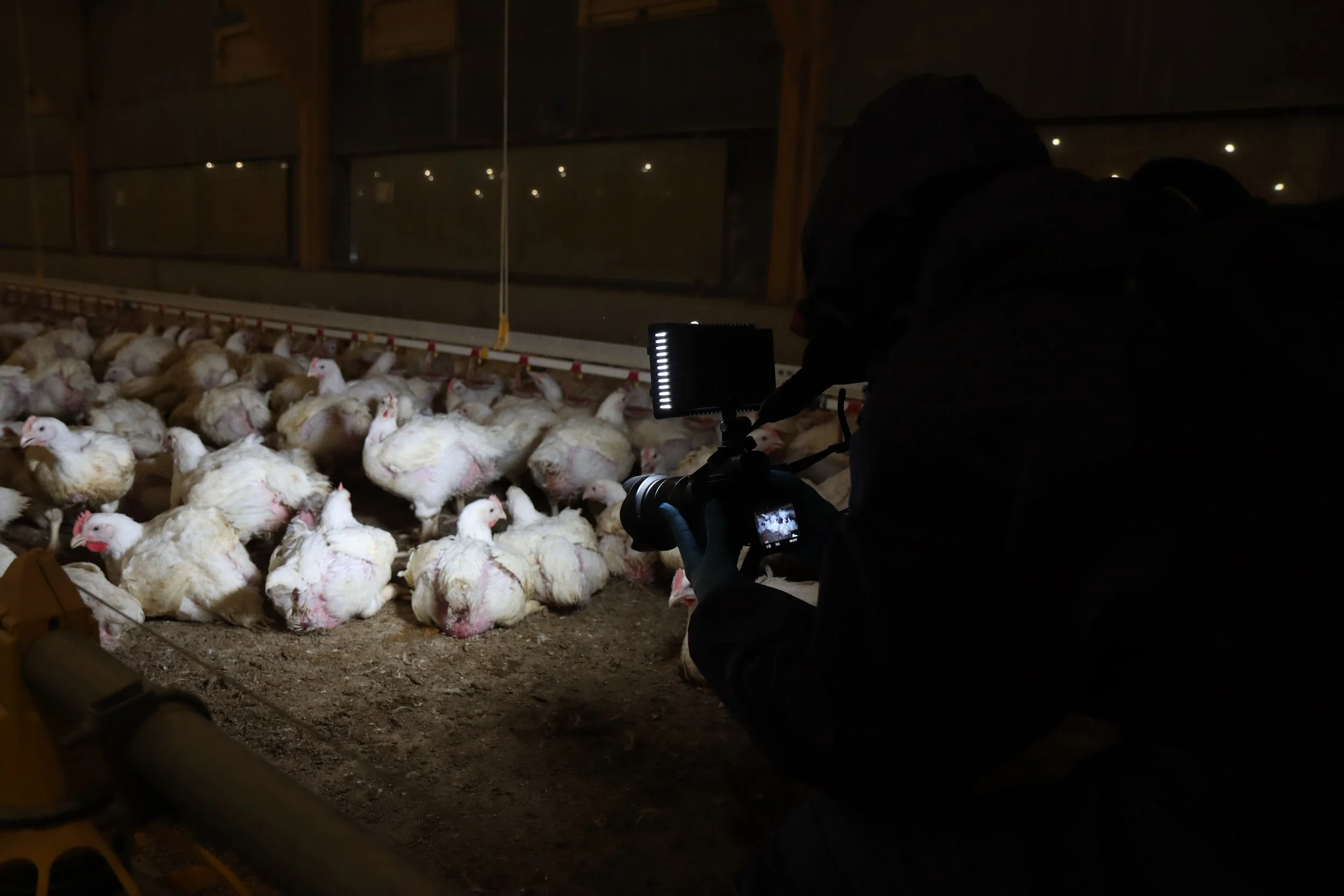
For most of my career, there has been very little support for investigators. Even when I worked for large international animal welfare and animal rights organisations, the priority was getting the footage. And rightly so. But nobody really talked about what repeatedly doing this work might do to the person behind the camera. There was almost an unspoken attitude that the animals were suffering far more than you were, so you just dealt with it.
Over the years I've watched some very good investigators, including good friends of mine, burn out and eventually leave animal advocacy because they just couldn't keep doing it anymore. I’ve sometimes felt guilty that, by asking people to keep going back out, I had contributed to that, and I wanted to do something about it.
Last year I started talking to Miles Wrightman, a vegan psychotherapist and activist, about providing wellbeing support for Tracks investigators. I surveyed the 15+ investigators who had worked with us over the previous year to see if this was something they would use, and it was clear there was a real need for it.
We’ve now started offering confidential sessions with Miles, and the early feedback has been really encouraging. One investigator wrote:
“I never worked with someone who provided this and I'm just really thankful.”
At the moment this is something Tracks is funding ourselves. We don't have any major funders behind us. I just think it's something we should be doing, and I'd eventually like to see this kind of support available much more widely beyond Tracks.
Investigators are part of the backbone of the animal protection movement. We go into places most people never see and bring back the evidence that campaigners, journalists, lawyers and advocates need.
We make the invisible visible. We should probably get better at looking after the people who do it.